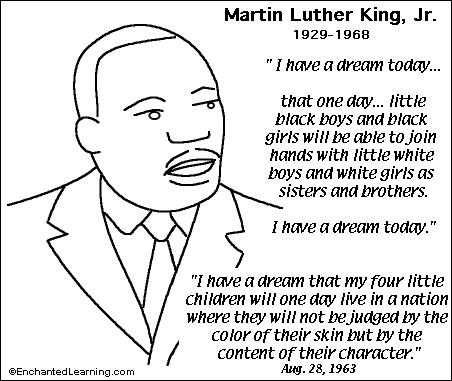
The majority of people would assume that this speech is aimed at a predominantly white male audience considering they held the most power in the 1960s era. However if you scrutinize the text more thoroughly you notice the simplicity of the way it is written for example the basic vocabulary and the short length and basic format of the speech. This suggests that the speech is aimed at a younger audience. Moreover the way he writes in the future tense, highlights how he is aiming his speech to the next generation of adults, who at the time of the speech would have been children. Luther King repeats the line 'I have a dream' which emphasizes his point to his audience more clearly, particularly children who would respond well to memorable repetition. The repetition of 'little' in the speech to describe the children encourages the reader to feel sympathetic as children are thought of as innocent organisms. The pausing in between the lines of the speech creates a dramatic impact and makes the listeners think and latch on to Luther King's words. The repetition of the pronoun 'I' makes the listener feel a personal connection with Luther King so they are more likely to be persuaded into wanting to make a change. Luther King exerts power by his first line being 'I have a dream...' and then makes a dramatic pause which makes the listener want to hear more.

No comments:
Post a Comment